
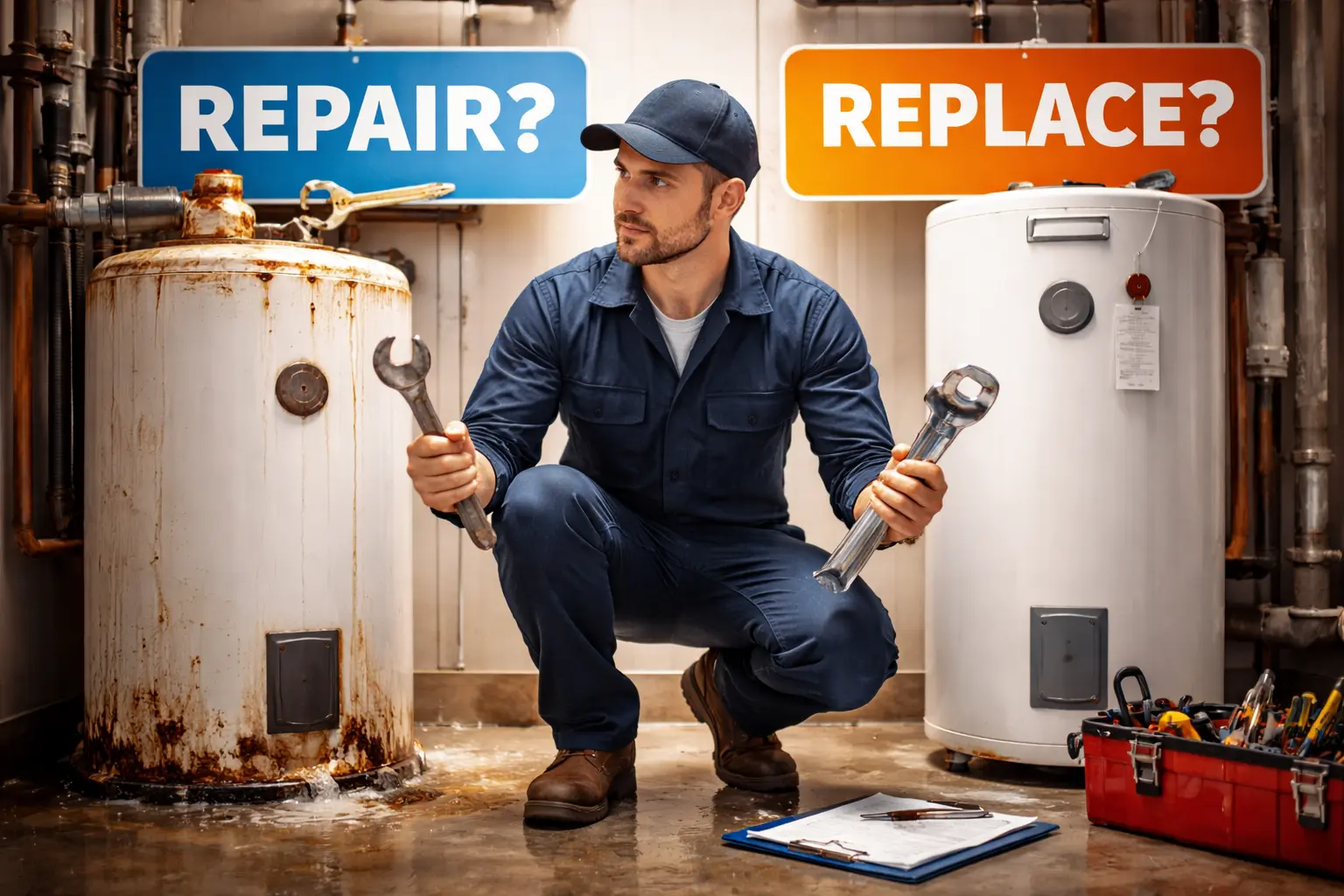
Few household problems are as disruptive as losing hot water. When your water heater starts acting up, the big question becomes: should you repair it—or is it time to replace it?
Making the wrong call can mean wasted money, repeat breakdowns, or a sudden cold-shower emergency. This guide breaks down the key signs homeowners should look for to make a smart, cost-effective decision.
Start With the Age of Your Water Heater
Age is one of the most reliable indicators.
- Traditional tank water heaters typically last 8–12 years
- Tankless water heaters often last 15–20 years
If your unit is nearing or past these ranges, replacement is usually the better long-term investment—especially if problems are becoming more frequent.
Rule of thumb: Older systems cost more to keep running and are more likely to fail unexpectedly.
When a Water Heater Repair Makes Sense
A repair is often the right choice when:
- The unit is under 8 years old
- The issue is isolated (thermostat, heating element, pilot light)
- There are no signs of tank corrosion or leaking
- The repair cost is relatively low
Common repairable issues include:
- No hot water or inconsistent temperatures
- Tripped breakers or ignition problems
- Faulty heating elements or gas valves
In these cases, a professional repair can safely restore performance and extend the unit’s lifespan.
Clear Signs It’s Time to Replace
Replacement is usually the smarter option if you notice:
- Rusty or discolored hot water
- Water pooling around the base of the tank
- Loud popping or rumbling noises
- Rising energy bills tied to water heating
- Multiple repairs within a short period
Leaks or internal tank corrosion cannot be repaired safely and often indicate imminent failure.
The Cost Comparison Homeowners Miss
Many homeowners focus only on today’s repair cost—but long-term costs matter more.
Repair may cost less upfront, but:
- Older units are less efficient
- Repairs become more frequent
- Sudden failure can cause water damage
Replacement offers:
- Improved energy efficiency
- More consistent hot water
- Manufacturer warranties
- Lower long-term operating costs
In many cases, replacing an aging system prevents future emergencies and saves money over time.
Tank vs Tankless Considerations
If replacement is needed, this is the ideal time to evaluate tank vs tankless options.
- Tank systems: lower upfront cost, simpler installation
- Tankless systems: endless hot water, higher efficiency, longer lifespan
A professional evaluation ensures the system is properly sized and compatible with your home’s plumbing and electrical setup.
When to Call a Professional
If you’re unsure whether your water heater needs repair or replacement, a professional inspection is the safest step. Trained technicians can identify internal issues that aren’t visible from the outside and provide clear recommendations without guesswork.