
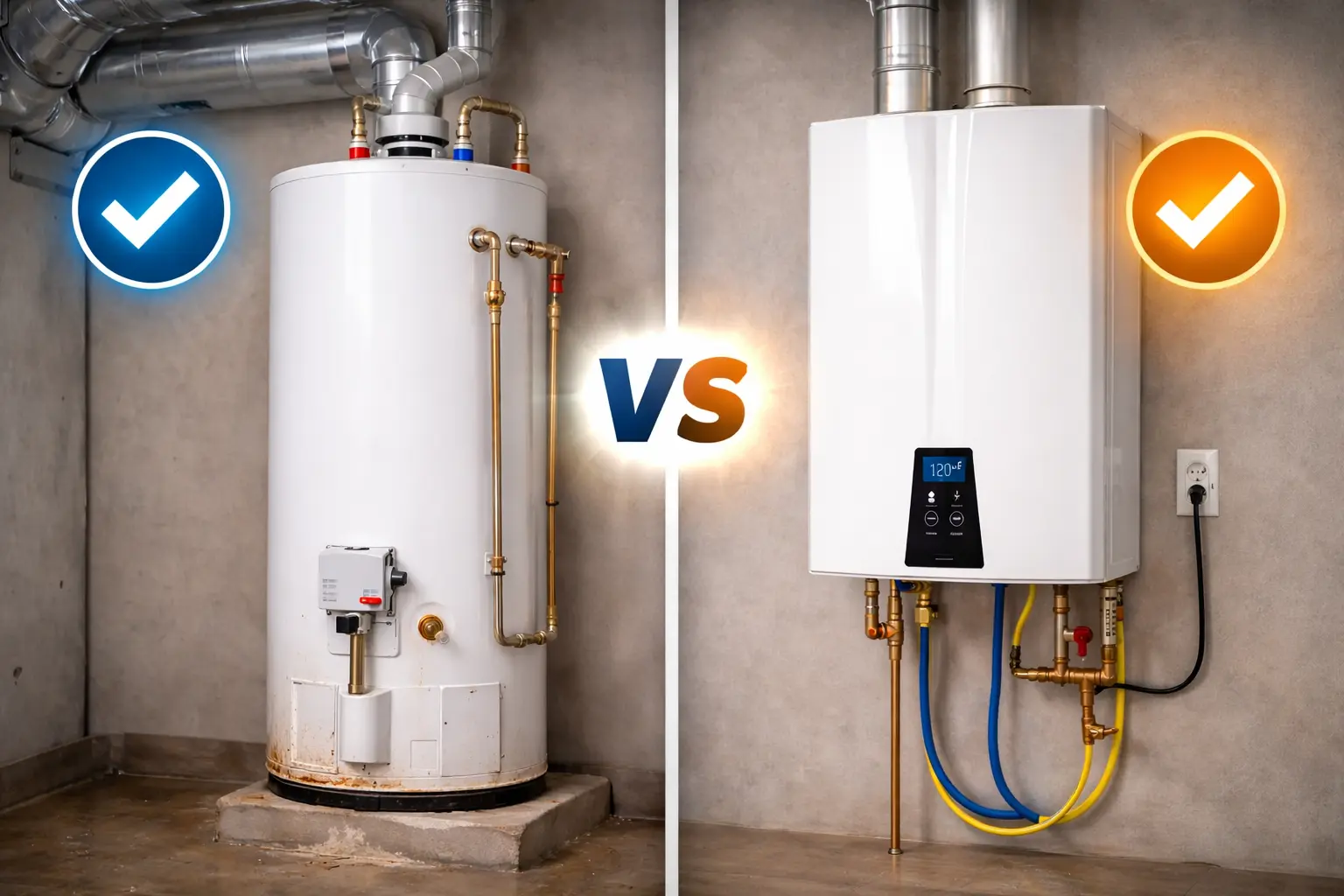
Choosing a water heater can feel overwhelming if you’re not sure what size, fuel type, or efficiency level you need. Most homeowners only replace a water heater when theirs fails, which makes the decision even more stressful. This guide walks you through the key questions to ask so you can choose the right system with confidence — and avoid overspending on something that doesn’t fit your home.
What Should You Look for When Choosing a Water Heater?
When you start choosing a water heater, think about your home size, how much hot water you use, and what energy sources are available. Tank and tankless systems both work well, but they serve different needs. Tank models store heated water and fit most households. Tankless systems heat water on demand and work great for smaller homes or families who want endless hot water and lower energy use. Your budget, efficiency goals, and space also matter in the decision.
What Size Water Heater Do You Need for Your Home?
Sizing affects comfort and efficiency. Too small and you’ll run out of hot water. Too large and you’ll waste energy.
Sizing a Tank Water Heater
Most homes need:
30–40 gallons
40–50 gallons
50–80 gallons
Your usage matters too. If you run multiple showers or appliances at once, go bigger.
Sizing a Tankless Water Heater
Tankless units use flow rate instead of gallons. You’ll want to match:
A licensed HVAC technician can run the numbers for your home.
Water Heater Type Comparison
Tankless Water Heaters
Tank Water Heaters
What’s the Right Choice?
If you want steady hot water with lower energy bills, tankless is a strong option. If upfront price matters most, a tank system may be better.
How Much Energy Efficiency Should You Look for in a Water Heater?
Energy-efficient water heaters save money every month. Look at:
Heat pump (hybrid) water heaters can cut energy use by up to 70%, making them one of the best options for long-term savings.
When Should You Replace Instead of Repair Your Water Heater?
Replace your system if you notice:
Older systems also cost more to run, so upgrading often pays for itself.
Frequently Asked Questions
How long does installation take?
Most tank installations take 2–3 hours. Tankless systems may take longer due to venting or electrical work.
Are gas or electric water heaters better?
Gas heats faster and costs less to run in many areas. Electric is easier to install and works well for smaller homes.
Can I switch from a tank to a tankless water heater?
Yes. Many homeowners upgrade to tankless units for energy savings and endless hot water. Some plumbing or electrical updates may be required.
What’s the most energy-efficient water heater?
Heat pump (hybrid) water heaters are the most efficient for most households.
Should I flush my water heater?
Yes. Flushing once a year helps prevent sediment buildup and improves performance.